

The National Museum of Qatar tells the story of Qatar and its people; the Museum of Islamic Art brings together art representing diverse Islamic heritage. These museums in Doha sit along the Corniche, but their collections and ticket arrangements differ, so the best choice depends on what you want to see and how much time you have.
- National Museum of Qatar: national history and heritage, on Museum Park Street off the Corniche.
- Museum of Islamic Art: Islamic art across four floors, on a purpose-built island along the Corniche.
- Time for MIA: allow at least two hours to explore the museum.
- MIA admission: QAR 50 for non-resident adults; resident adults and children aged 16 and under enter free.
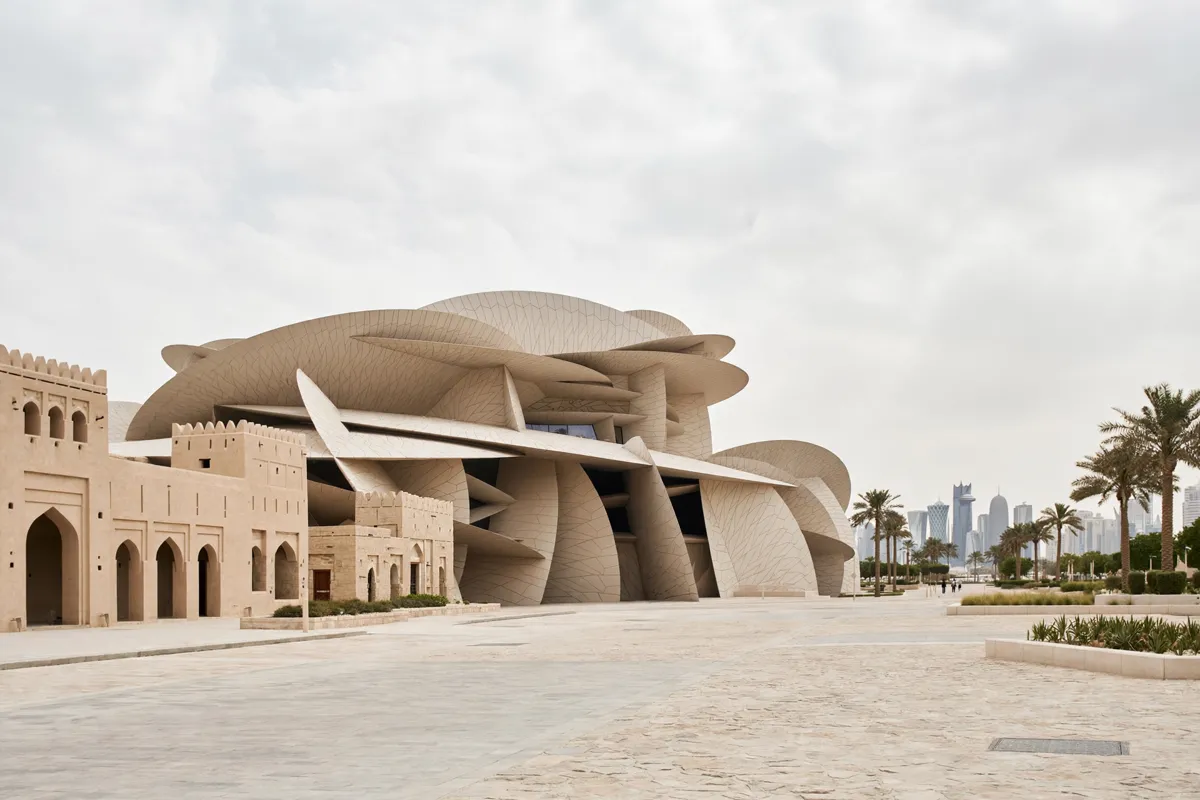
National Museum of Qatar: national history and heritage
The National Museum of Qatar (NMoQ) tells the story of Qatar and its people, making it the choice for a visit centred on the country’s history and heritage. It stands on Museum Park Street, just off the Doha Corniche.
Its architecture is part of the visit. Designed by Jean Nouvel, the building takes inspiration from the desert rose and incorporates the restored palace of Sheikh Abdullah bin Jassim Al Thani, built in the early 20th century.
The palace became the Qatar National Museum in 1975, and its adaptation as a museum received the Aga Khan Award for Architecture in 1980.
To focus your planning on the building and its story, what to know before visiting the National Museum of Qatar is a useful companion. The museum’s opening pattern differs by day: it is closed Tuesday, opens later on Friday, and stays open later on Thursday. Check the official site before you go, as hours can change.
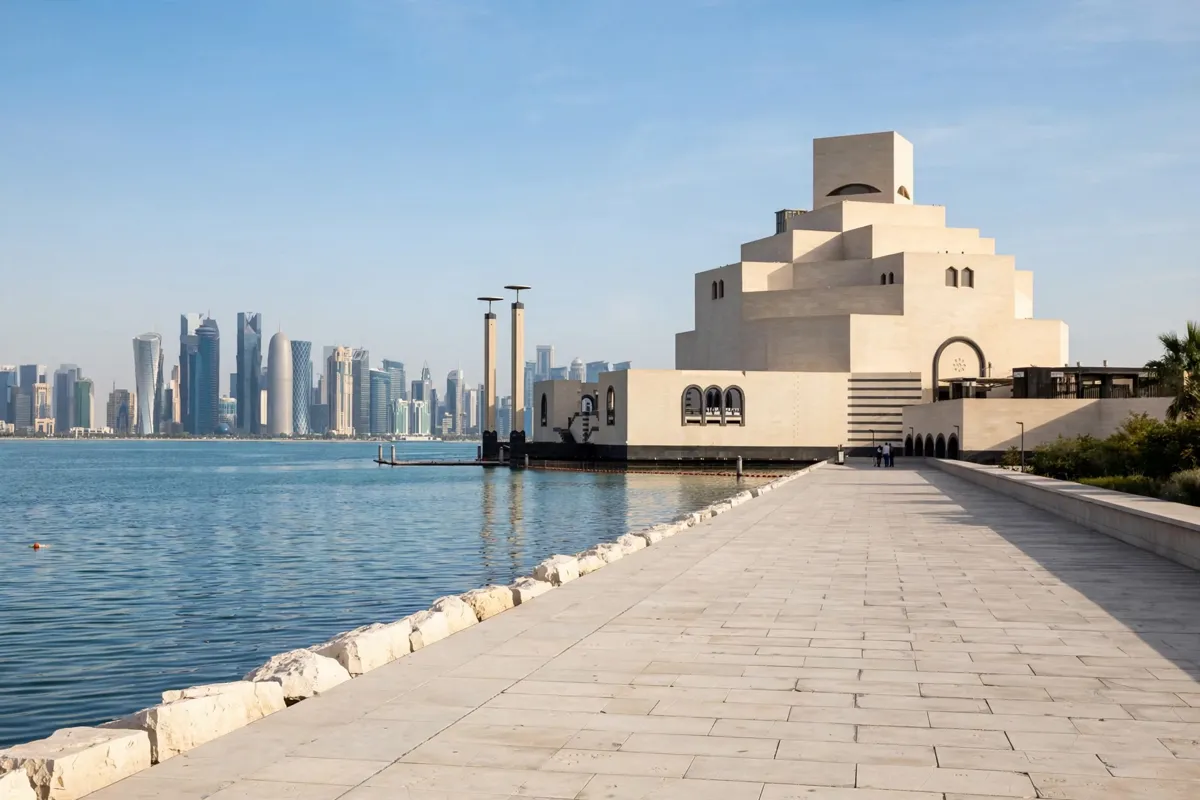
Museum of Islamic Art: collections and waterfront setting
The Museum of Islamic Art (MIA) is the stronger fit if you want to focus on art and Islamic heritage. Its collection represents diverse Islamic heritage, and the galleries extend across four floors.
Designed by I.M. Pei, MIA stands on a purpose-built island along the Corniche. The setting puts the museum beside Doha’s waterfront promenade, while MIA Park is open around the clock. Souq Waqif is a few minutes’ walk from MIA, so the museum can sit alongside time in the market area.
MIA recommends allowing at least two hours to explore the museum. For more on its collection and setting, read how to plan a visit to the Museum of Islamic Art.
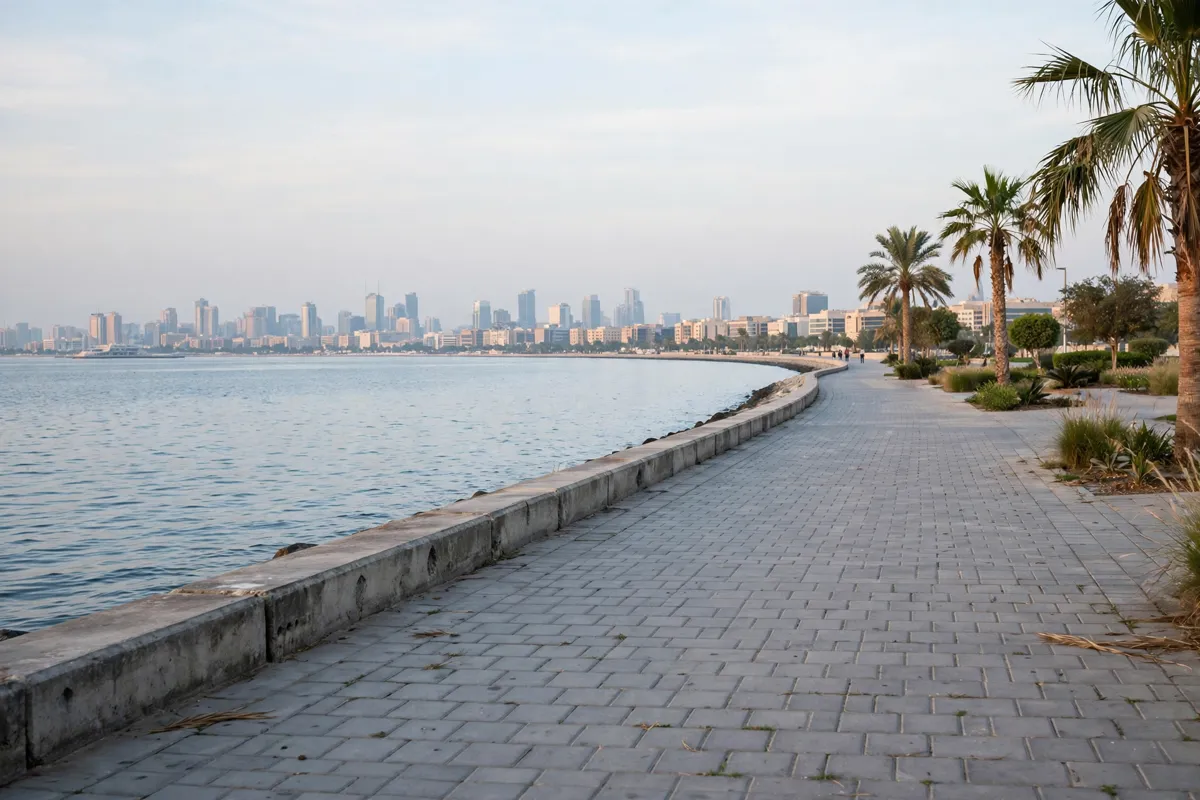
Choosing a museum visit by interest and available time
Choose NMoQ for Qatar’s story and heritage, or MIA for a collection of Islamic art and a waterfront setting. If architecture is a deciding factor, NMoQ combines Jean Nouvel’s desert-rose-inspired design with a restored early-20th-century palace; MIA offers I.M. Pei’s purpose-built island setting.
Time is another useful distinction. MIA recommends setting aside at least two hours for its galleries. If you have a tighter window, check the current opening and ticket details before building your day around either museum. For a wider itinerary, how to plan one day in Doha from the central city connects museum time with other stops.
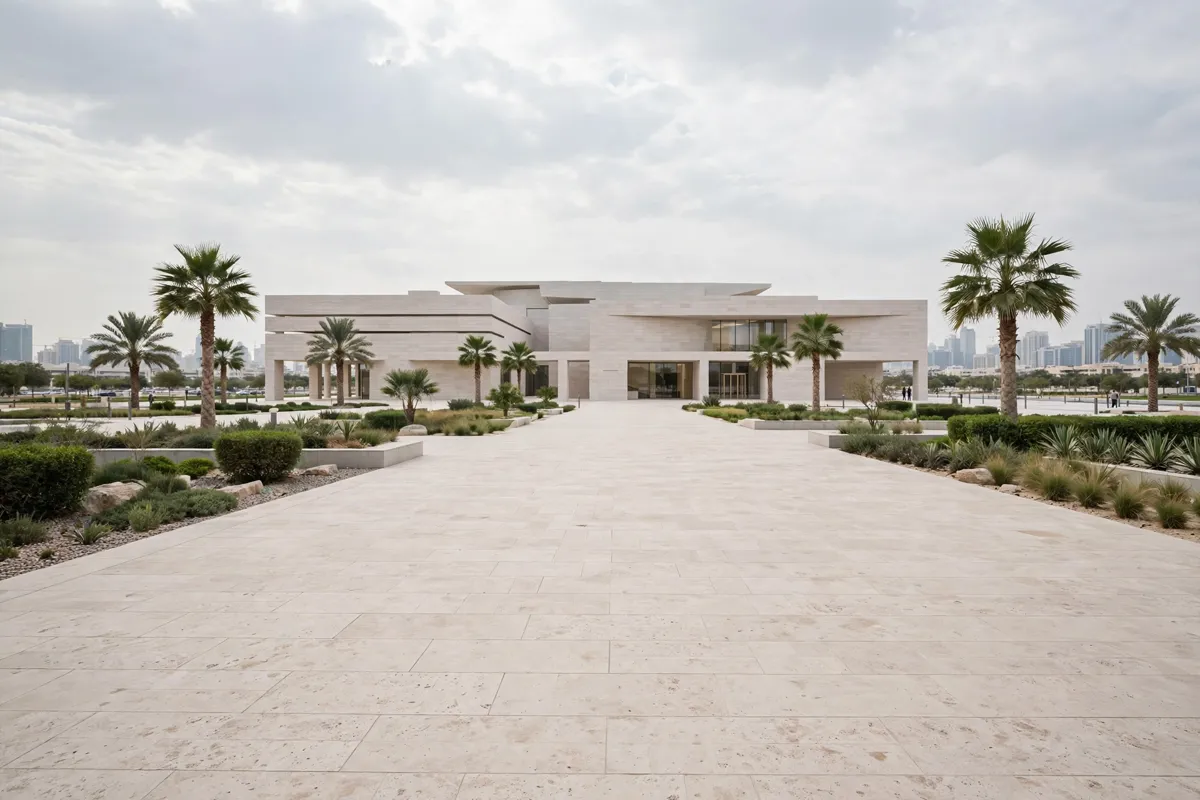
Tickets, opening hours, and visitor planning
MIA’s general admission is QAR 50 for non-resident adults, QAR 25 for non-resident students, and free for Qatar-resident adults and children aged 16 and under. Resident and student tickets require valid identification. Tickets cover the permanent collection and all exhibitions, allow a single entry on the admission date, and can be bought on arrival or reserved in advance.
Qatar Museums offers tickets in one-hour time slots and recommends arriving on time. Children under 12 must be accompanied by an adult in its museums and galleries. MIA’s visitor guidance asks guests to cover their shoulders and knees and warns that entry may be refused if clothing is considered unsuitable.
For transport, the nearest metro station to NMoQ is National Museum on the Gold Line; Qatar National Museum station on the Gold Line is listed as the nearest station to MIA. MIA can also be reached by car, taxi or free shuttle bus. Its limited parking can fill quickly, particularly on weekends.
MIA is closed on Wednesday and has later hours on Thursday and a later Friday opening. NMoQ is closed Tuesday, also has later Thursday hours and opens later on Friday. Check Qatar Museums’ official site before you go for current hours, ticket slots and visitor guidance.
Connecting museum visits with Souq Waqif and the Corniche
MIA, the Corniche and Souq Waqif make a natural sequence for a day around the waterfront: the promenade runs beside the museum, and the market is a few minutes’ walk away. You can start with the museum’s galleries, then head towards the Corniche or Souq Waqif.
From Al Safa Royal Suites, a hotel in central Doha, MIA is about a 9-minute drive. Keep the museum visit as the anchor of your plan, then decide how much time to give the waterfront and market.
FAQs
Which Doha museum focuses on Qatar’s history?
The National Museum of Qatar tells the story of Qatar and its people.
How much time should you allow for the Museum of Islamic Art?
MIA recommends allowing at least two hours to explore.
Can you visit Souq Waqif from the Museum of Islamic Art?
Yes. Souq Waqif is a few minutes’ walk from MIA.
Is the Museum of Islamic Art open every day?
No. It is closed on Wednesday.